

Quick answer: Brand deals go to creators who make a brand's job easy - the right audience, proof of engagement, and a clean pitch. The path is repeatable: find brands that fit, build a media kit around your audience and results, send a short pitch email, set rates based on deliverables (not just follower count), follow up once, and disclose every partnership. You do not need huge numbers - you need relevant, engaged ones you can prove.
Find brands that actually fit your audience
The best partnerships feel obvious to your audience because the product is something you would talk about anyway. Start by listing brands you already use, then widen to their competitors and to companies that clearly target the same people who follow you. Guides like Later's how to pitch to brands and Hootsuite's brand pitch walkthrough both stress the same thing: relevance beats reach. A tightly matched micro-audience is worth more to a brand than a big, generic one.
- Match the audience, not just the niche. A fitness brand cares whether your followers are the age, location, and mindset of its buyers.
- Look for brands already working with creators. If a company runs paid partnerships with people your size, you are an easier yes.
- Shortlist 10 to 20 realistic targets. A focused list you can research properly beats blasting hundreds of generic DMs.
Build a media kit that proves your value
A media kit is a one to two page snapshot that answers the only question a brand really has: can this creator drive results for us? Keep it visual, current, and honest. Include:
| Section | What to include |
|---|---|
| Who you are | A short bio, your niche, and the kind of content you make. |
| Audience | Follower count plus the demographics that matter - top locations, age range, and gender split. |
| Engagement | Your real engagement rate and typical views, not just totals. This is the number brands scrutinize most. |
| Proof and results | Best-performing posts, any past collaborations, and outcomes you can point to. |
| Offer and contact | Your deliverables (Reels, Stories, carousels), rough packages, and how to reach you. |
The engagement and performance figures are where creators fumble - screenshots go stale and "usually around" is not convincing. Pulling current, accurate numbers with a tool such as the free IShort extension lets you show a real engagement rate and typical view count for your profile, which reads far stronger than a follower count alone.
Write a pitch email that gets replies
Short, specific, and about the brand - that is the whole formula. A pitch that leads with what you can do for them beats one that lists everything about you.
- Find the right contact. Look for a partnerships, influencer, or marketing email rather than a generic support inbox. A named person always beats "to whom it may concern."
- Open with relevance. One line on why you and this brand fit - the product you already use, the audience overlap, a campaign you loved.
- Lead with value. Say what you will deliver and the result you are aiming for, not just your follower count.
- Attach the media kit. Keep the email itself tight and let the kit carry the detail.
- Propose a clear next step. Suggest a quick call or ask if they run creator partnerships this quarter. Make replying easy.
Set your rates
Pricing is where new creators either undercharge or freeze. Anchor your rate to the value and effort of the deliverables, not to your follower count in isolation. The factors that move a price:
Deliverables
A produced Reel costs more than a Story frame. Price each piece, then bundle. More content means a higher total.
Reach and engagement
Your typical views and engagement rate matter more than raw followers. An engaged audience justifies a higher rate.
Usage and exclusivity
Charge extra if the brand wants to run your content as ads (whitelisting) or keep you from working with competitors.
Start from a baseline per deliverable and adjust up for extra content, usage rights, and exclusivity. It is normal to negotiate - lead with a package rather than a single number, and be ready to explain what each part is worth.
Follow up without being annoying
Most deals are lost to silence, not rejection. If you do not hear back, send one short, friendly follow-up about a week later that adds something new - a recent result, a fresh idea for their product, or availability for the coming month. One good nudge is professional; five is spam. If there is still no reply, move to the next brand on your list.
Disclose every partnership
Disclosure is not optional. Advertising rules in many countries require creators to clearly label sponsored content, and Instagram provides a built-in paid partnership label for exactly this. Turn it on for any post you were paid for or gifted, and add a plain tag like #ad so it is obvious at a glance. Clear disclosure protects you legally and, counterintuitively, builds trust - audiences respect creators who are upfront, and brands prefer partners who keep them compliant.
Back your pitch with real performance numbers
The creators who win deals are the ones who can prove their reach on demand. Before you send a single pitch, know your true engagement rate and typical views - and be ready to show them. The free IShort Chrome extension pulls views, likes, comments, and engagement for any public profile, so your media kit rests on real figures instead of rounded guesses.
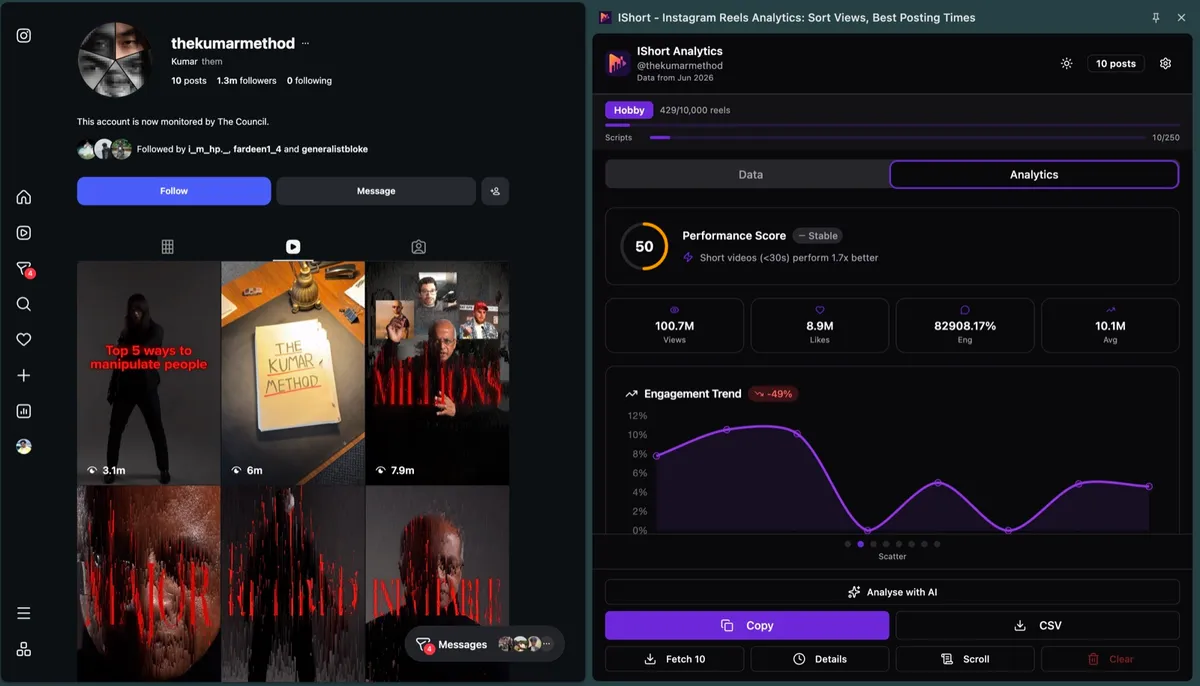
Use the same view to study creators a brand has already worked with - see what their partnership Reels looked like and how they performed - then position yourself as the obvious next fit. For more on turning that into income, see our guide to Instagram Reels monetization and how to analyze competitor Reels.
Put real numbers in your media kit
Install IShort free and pull your true views, likes, and engagement rate for any public profile - the exact figures brands ask for before they sign a deal. No login, no cost.
Add to Chrome - Free Add to Edge - FreeFrequently Asked Questions
How many followers do you need to get brand deals on Instagram?
There is no fixed number. Nano and micro creators with a few thousand engaged, niche followers land deals all the time, because brands care more about engagement, relevance, and trust than raw follower count. A small, well-matched audience you can prove is worth more than a large, generic one.
What should an Instagram media kit include?
Keep it to one or two pages: a short bio, your niche, audience size and key demographics, your real engagement rate and typical views, best-performing content and any past collaborations, your deliverables and rough packages, and how to contact you. Current, accurate numbers matter more than a polished design.
How do I pitch a brand on Instagram?
Research brands that genuinely fit your niche, find the right partnerships or marketing contact, and send a short, personalized email that leads with the value you offer, includes your media kit, and proposes clear deliverables and a next step. Keep the email tight and follow up once after about a week if you do not hear back.
How much should I charge for a brand deal?
Base your rate on the deliverables, your reach and engagement, usage rights, and exclusivity rather than follower count alone. Start from a baseline price per deliverable, then adjust up for extra content, running your posts as ads, or agreeing not to work with competitors. Lead with a package and be ready to negotiate.
Do I have to disclose paid partnerships?
Yes. Disclosure is required by advertising rules in many countries and expected by Instagram. Use Instagram's built-in paid partnership label and add a clear tag like #ad so your audience knows the post is sponsored. It keeps you compliant and actually builds trust with your followers.
Final thoughts
Brand deals are not reserved for creators with millions of followers - they go to the ones who make partnering feel safe and simple. Target brands that genuinely fit your audience, prove your value with a clean media kit and real engagement numbers, pitch with a short value-first email, price by deliverables, follow up once, and disclose everything. Do that consistently and the deals stop being a lucky break and start being a pipeline.